A comprehensive guide for growers, developers, researchers, and ag-tech investors
The greenhouse industry is complicated — highly competitive, oftentimes undifferentiated, with varying price points. While an imported greenhouse may appear to be a bargain on paper, hidden costs related to permitting, engineering, shipping, construction, and long-term operations can significantly impact the total cost of ownership.
This guide explores the key considerations involved in selecting a greenhouse supplier, including the differences between greenhouse manufacturers and design firms, the role of feasibility studies, domestic versus imported structures, permitting requirements, installation considerations, and long-term operating costs.
Whether you are a commercial grower, investor, university researcher, or developer planning a controlled environment agriculture facility, understanding these factors can help you avoid costly mistakes and make a more informed investment.
Greenhouse Manufacturer vs. Greenhouse Design Firm
Whether you are building a commercial greenhouse or research greenhouse, one of the first decisions is whether to source a greenhouse structure from a U.S. manufacturer or an international supplier.
There are two main options when deciding on a new greenhouse project: Purchasing a greenhouse, including some equipment from a manufacturer, or working with a design group either as a design consultant or as a design/material supply partner. Failing to understand the difference between the two options can leave many people confused, and conflating them often leads to misaligned expectations.
For many projects, working with a team that provides both greenhouse design services and engineering expertise can help align facility design with operational goals rather than manufacturing limitations.
Greenhouse Manufacturer
This is usually a business that owns a manufacturing facility. They purchase either standard steel tube or flat stock and manufacture them into greenhouse components. They offer cost-effective products, but as the buyer, you are limited to what their manufacturing equipment can produce. A greenhouse manufacturer will work with you to design a building based on their manufacturing capabilities. They can help you choose what they think are the appropriate systems to add to the greenhouse, including air intake, exhaust fans or roof vents, evaporative cooling, and shade systems.
While the greenhouse manufacturer will provide you with a cost-effective greenhouse, it may not necessarily meet your growing needs or goals.
Design Group/Design Build
A design group will start by asking questions about your project, such as:
- What are your business goals?
- What crops are you growing?
- What environmental conditions are you trying to create?
- Is water plentiful or scarce at your site?
- How much labor is available in your area?
- What type of equipment will you need in a headhouse?
From here, a design firm can begin to develop a program for a complete facility. They can help design a structure based on your needs, not manufacturing capabilities (or limitations), while also taking into account site-specific details, systems integration, controls, etc., to create a holistic system that works efficiently and effectively to meet your goals.
Design firms spend a great deal of time trying to understand the client’s needs and engineering systems to fulfill those needs before any material orders are placed.
Sometimes, design firms will partner with greenhouse manufacturers to combine cost efficiency with some customized engineering and systems integration to create a truly functional facility at a more affordable cost.
One of the advantages of working with a design and engineering firm is that they are typically not limited to a single manufacturer or product line. Instead, they can evaluate multiple suppliers and source materials, structures, and equipment based on the specific needs of the project. This approach allows the team to balance cost efficiency, performance, durability, and operational goals rather than simply selecting what a single manufacturer produces. In many cases, the optimal solution may combine components from both domestic and international suppliers, creating a facility that is better aligned with the client’s long-term business objectives.
Before selecting a design and engineering firm, make sure they have the expertise and supplier network to deliver a greenhouse solution that fits your needs. The right partner should be able to strike the right balance between affordability, performance, and customization to help you achieve your business or research objectives.
Greenhouse Consulting, Feasibility Studies, and Avoiding Costly Mistakes
Regardless of which path you choose, hiring a consultant in the early stages of this process can be one of the most valuable investments you make. Experienced consultants have worked through projects from concept to completion and can provide feasibility studies that evaluate site conditions, climate data, utility availability, crop requirements, operational workflows, and ROI projections.
Many of the most important decisions affecting a greenhouse’s long-term success must be made before construction begins. Factors such as utility demands, permitting requirements, labor availability, workflow design, and climate-appropriate environmental systems can have a significant impact on both project costs and operational performance. When these considerations are not thoroughly evaluated during the planning process, they can become costly problems that are difficult and expensive to correct once construction is underway or the facility is operational.
For this reason, many successful greenhouse projects begin with a comprehensive feasibility study. By evaluating technical, operational, and financial requirements before significant capital is committed, project teams can identify potential risks early, make informed decisions, and develop a facility that is better aligned with their production goals, budget, and long-term business objectives.
Learn more about greenhouse feasibility studies and project planning.
Advantages and Limitations of Domestic Greenhouse Structures
There are a handful of U.S.-based greenhouse manufacturers in the market today, a number that has declined over time due to industry consolidation. Many of these companies offer similar structures, technologies, and pricing, making factors such as reputation, customer service, responsiveness, and project experience important differentiators. As a result, referrals and word-of-mouth recommendations often play a significant role in the decision-making process, particularly for large or complex projects where long-term support and a proven track record are critical. That said, several manufacturers offer unique greenhouse designs or specialized technologies that may be well-suited to specific applications. For this reason, it is always worthwhile to evaluate the full range of available options before selecting a supplier.
Advantages
For U.S.-based projects, there are several advantages to working with domestic greenhouse manufacturers. Language and time zone alignment can make communication easier, especially during the design phase of a large project. Being able to communicate with your manufacturer during normal U.S. business hours makes it much easier to address questions, resolve issues, and keep projects moving forward efficiently.
Permitting and code compliance can also be simpler with a domestic supplier. Many U.S. manufacturers can provide state- or municipality-specific stamped structural drawings and engineering documentation for permit submission. This is often more efficient than having a local structural engineer review, modify, and certify an internationally engineered structure to meet U.S. requirements for wind, snow, seismic, and other local code conditions.
Limitations
One limitation of sourcing a greenhouse domestically is that many U.S. structures rely on 8mm polycarbonate as the standard glazing option. While some companies offer alternative materials, many affordable, standard greenhouse models have limited glazing choices beyond polycarbonate.
Want to learn more about glazing materials? Check out our guide: Best greenhouse glazing materials: how to think about the choice over time
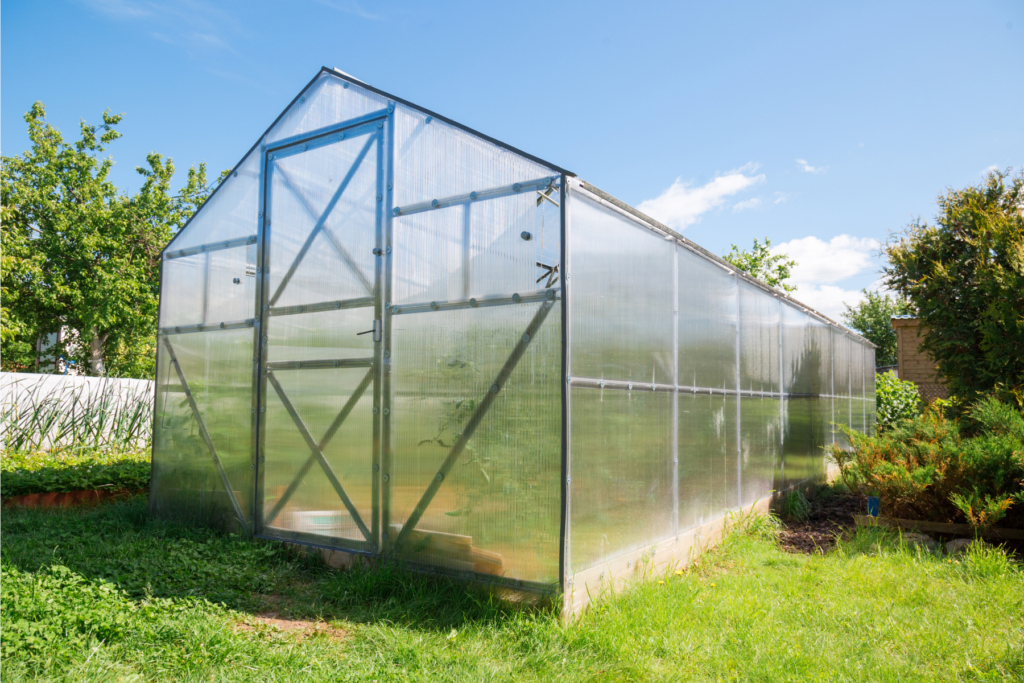
Regardless of where a greenhouse is manufactured, it is important to understand permitting requirements early in the planning process. Building departments may require stamped structural drawings, site-specific engineering calculations, and documentation demonstrating compliance with local building codes. Addressing these requirements upfront can help avoid costly redesigns, approval delays, and unexpected expenses later in the project.
Benefits and Risks of Imported Greenhouse Structures
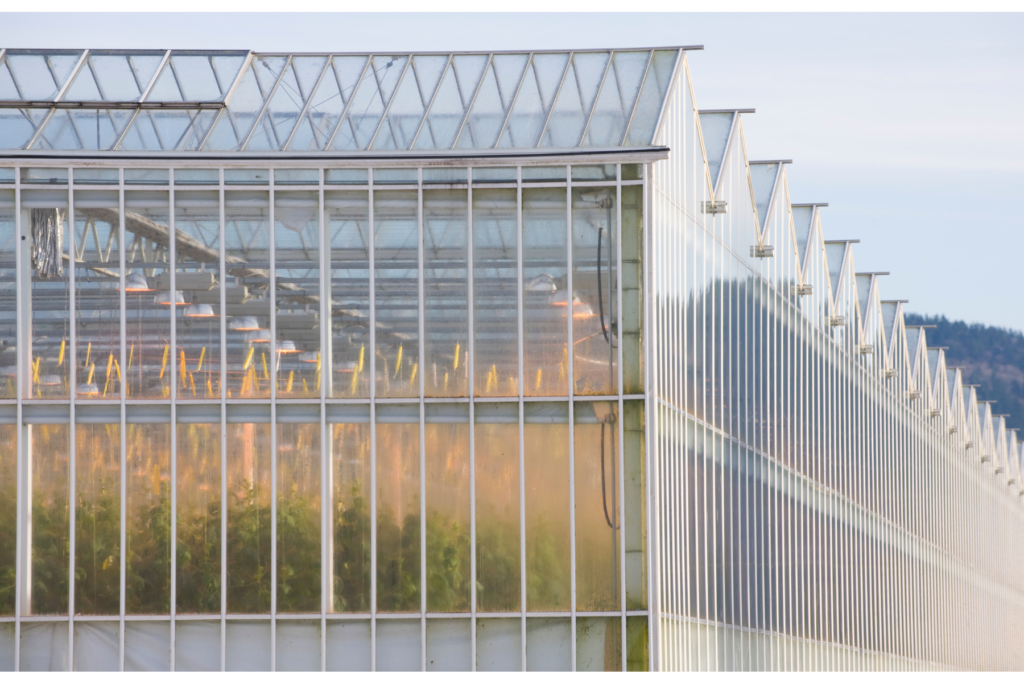
When one thinks about a mid to large-scale production greenhouse, a European greenhouse is often the structure that comes to mind. The Europeans are very good at supplying affordable, large-scale greenhouses. Many imported European greenhouses are cost-effective, work well in some climates, and incorporate long-lasting single-pane glass glazing material.
While the structures are affordable and well-designed, there are some downsides to building them in the US. The first and most obvious issue is that these greenhouses come with plans dimensioned in the metric system. This alone can cause major headaches for permitting and construction, and it can take a lot of work to convert metric to imperial.
Currently, with tariffs in place in the US, what was a cheap greenhouse a few years ago may no longer be as affordable. Consulting with a customs broker is a very important step in the process of understanding what it would take to bring a greenhouse manufactured in another country into the US.
Most European greenhouses use glass as the primary glazing material. Glass performs very well, but the European single-pane glass that often comes with greenhouses can be problematic in the US. Non-laminated glass in ceiling applications is often not permitted because it can be very dangerous to workers inside the greenhouse if the glass breaks. The required added laminate, to keep the glass from falling if it breaks, increases the cost of the glass, reduces light transmission, and often disables all UV light from entering the greenhouse.
Another issue with European greenhouses is that they are designed and engineered for climates that are often quite different from US climates. Many locations within the US experience extreme weather; both hotter and colder temperatures, higher elevation, more significant hail, etc, and standard European designs and heat/cool strategies aren’t designed to handle many of these weather conditions.
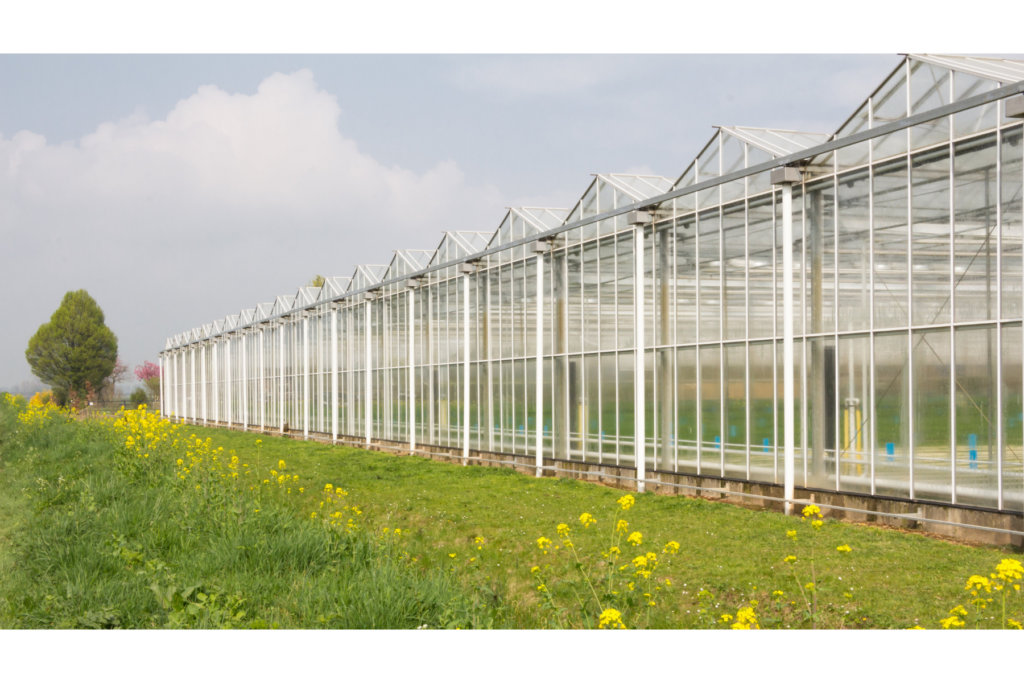
Construction of a European greenhouse can be difficult as well. What may be a standard construction technique in Europe may seem new and unusual to a US-based construction crew, so many projects have European supervisors travel to the US to advise the construction crew during erection. This adds cost to the project and usually slows the construction, which adds to the cost of the project.
As stated above, if there are issues with the greenhouse during construction or during operations, it will take a greater effort to travel overseas in order to help fix the issues. If there are any missing or damaged materials, it will take longer to travel to the project site in North America.
Looking Beyond the Purchase Price: Understanding Total Cost of Ownership
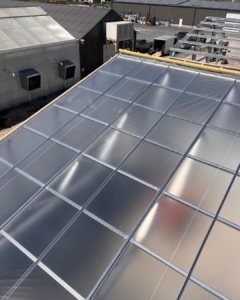
Renewable energy still plays an important role in sustainable greenhouse design, but it works best when paired with an already energy-efficient greenhouse. A poorly designed greenhouse with solar panels is still an inefficient one. When evaluating greenhouse suppliers, it is important to look beyond the initial purchase price. The lowest proposal is not always the most economical option over the life of the facility.
Factors that contribute to the total cost of ownership include:
- Freight and logistics costs
- Tariffs and import duties
- Structural engineering and permitting expenses
- Installation labor
- Energy consumption
- Maintenance requirements
- Availability of replacement parts
- Future expansion flexibility
- Crop performance and productivity
A greenhouse that costs more initially may ultimately deliver greater value through lower operating expenses, higher yields, improved labor efficiency, and reduced maintenance requirements.
How to Evaluate and Compare Suppliers
When comparing suppliers, focus on long-term value rather than the lowest initial quote. Understanding the true cost of materials, construction, shipping, and ongoing operations is essential—particularly when evaluating imported structures.
It is also important to compare environmental control strategies, HVAC systems, and expected energy consumption. In many cases, investing more in the right structure or equipment can reduce operating costs and improve profitability for years to come.
Choosing the Right Greenhouse for Your Project
There is no universal answer to whether a domestic or imported greenhouse is the better choice. The most successful projects are not defined by where the structure is manufactured, but by how well the facility aligns with the site’s climate, crop requirements, labor availability, operational goals, and long-term business plan.
Domestic and imported greenhouse systems each offer distinct advantages and limitations. The most important decision is often not the supplier itself, but whether the facility has been thoughtfully designed around the needs of the operation. A comprehensive design and engineering process can evaluate suppliers from around the world and identify the combination of structures, systems, and technologies that best support the project’s budget, production requirements, and long-term objectives.
Need Help Evaluating Greenhouse Suppliers?
Selecting the right greenhouse involves more than comparing equipment quotes. Engineering requirements, operating costs, environmental systems, permitting considerations, and long-term business objectives all play a critical role in project success.
Whether you are evaluating domestic manufacturers, imported greenhouse suppliers, or a fully customized facility, the Ceres team can help assess your options through greenhouse consulting, feasibility studies, and facility design services.
Looking to discuss your project ideas? Contact us.