The choice of greenhouse covering material is rarely as simple as comparing price per square foot. Upfront material cost is only one variable in an equation that also includes labor, maintenance, light transmission, disposal, and regulatory exposure over the life of a facility.
This case study examines a real-world scenario: a 3,000 sq. ft. gutter-connect greenhouse in Guatemala, evaluated over a 30-year lifecycle from 2026 to 2056. Two glazing systems were placed head-to-head: a standard 6-mil polyethylene film, the industry’s most common and lowest-cost entry point, and ETFE (Ethylene Tetrafluoroethylene), commonly marketed as “F-Clean,” a high-performance fluoropolymer film with a service life exceeding 30 years.
For a broader look at glazing options in general check out: How to Choose a Glazing Material
The Two Materials Compared
Polyethylene film, commonly called “poly” or “polyfilm”, is the global default for greenhouse coverings. It is inexpensive to source, straightforward to install, and widely available. Its central limitation is longevity: standard 6-mil film degrades under UV exposure and must be replaced roughly every 3–4 years, generating recurring material, labor, and procurement costs for the life of the facility.
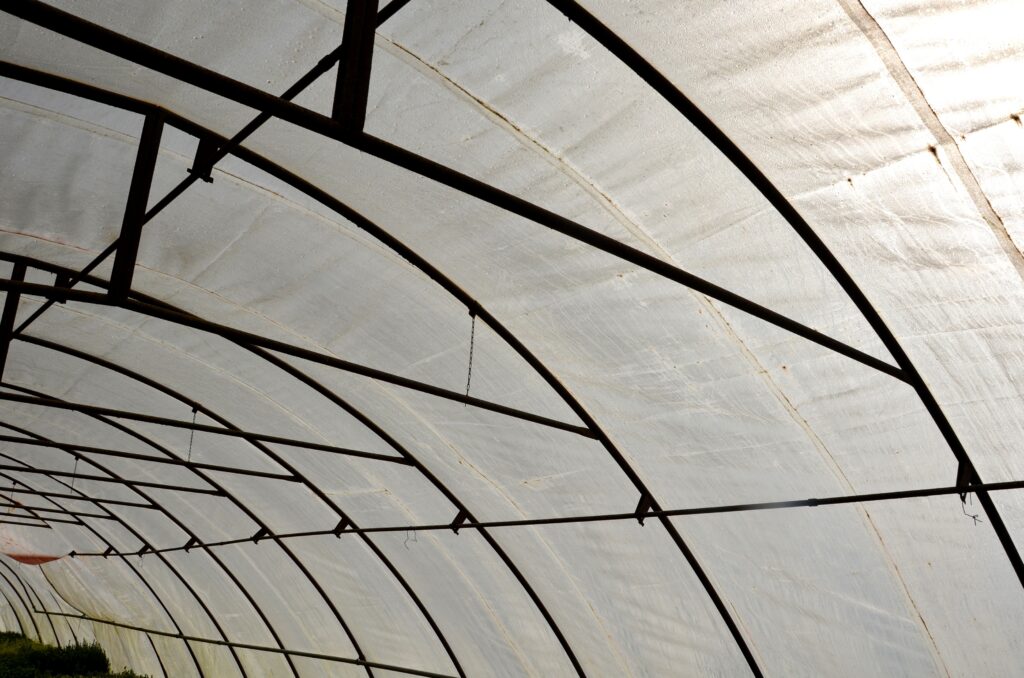
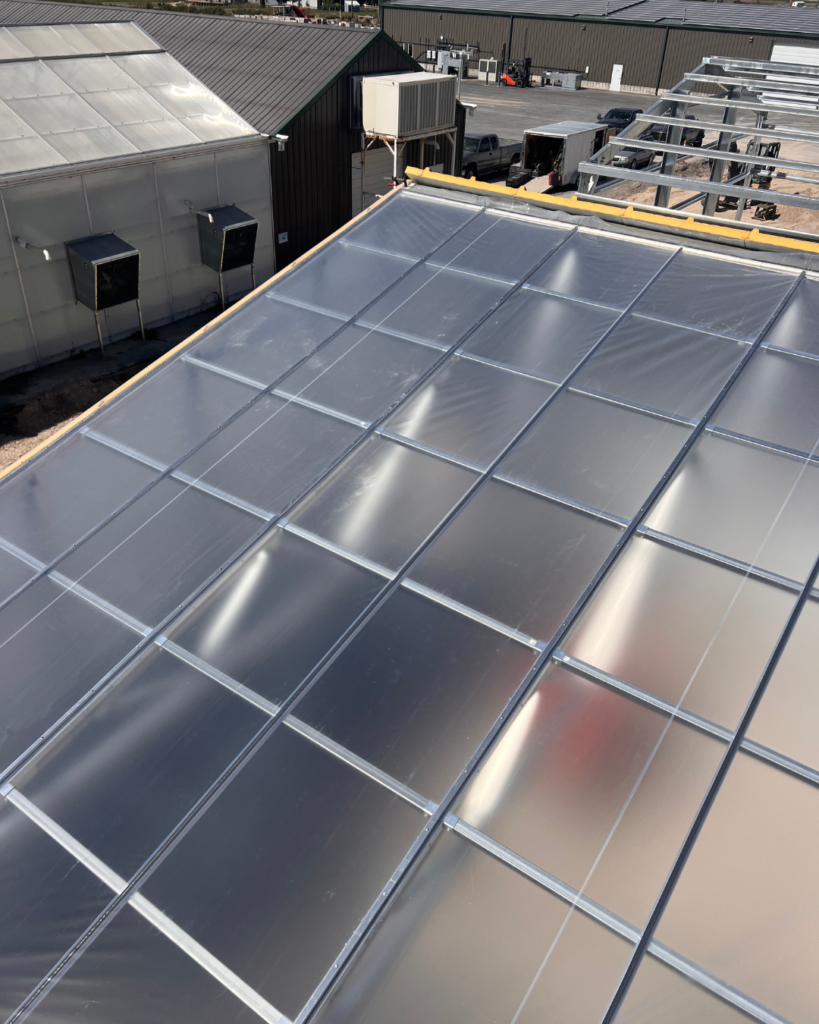
ETFE is a different category of product. Originally developed for aerospace applications, it has been adopted in high-value horticultural settings for its permanent optical stability, chemical resistance, and self-cleaning surface. Its upfront cost is substantially higher, typically 10–15x the per-foot cost of polyfilm, but it is designed to function as the permanent covering of a structure, with no scheduled replacement cycles.
The table below captures each major cost category across both systems over the full 30-year period. All figures are in U.S. dollars and incorporate escalating labor rates consistent with projected wage inflation trends in Guatemala.
| Cost Category | Polyfilm (6-mil / 200mic) | ETFE (Single Layer) |
| Initial Material Cost | ~$825 (Base Year) | ~$9,000 – $12,000 |
| Total Replacement Cycles | 8 Cycles (Every 3.75 yrs) | 0 Cycles (Lasts 30+ yrs) |
| 30-Yr Material Total | $21,200 | $12,000 |
| 30-Yr Labor Total (Loaded) | $18,400 (Escalating) | $1,500 (Initial only) |
| Procurement/Ordering | $7,600 (8 POs) | $350 (1 PO) |
| Maintenance & Cleaning | $96,000 | $48,000 (Self-cleaning) |
| Disposal Costs | $1,100 | $0 |
| Estimated 30-Year TCO | $144,300 | $61,850 |
| Relative Savings | Baseline | 57% Savings ($82,450) |
Interested in Learning more about ETFE? Check out: ETFE Greenhouse Glazing: A Different Way to Think About Greenhouse Materials
Key Cost Drivers Explained
The Labor Trap
In an environment of projected multinational labor cost escalation in Guatemala, polyfilm’s replacement schedule transforms a 2026 glazing decision into a commitment to purchase labor at 2040 and 2050 prices. Each replacement event requires a five-person crew to strip, clean, and re-skin the structure. By 2050, a single weekend of that labor, factoring in safety compliance and wage inflation, could exceed $4,000 per event. ETFE’s higher initial installation cost is, in this light, a fixed-price contract for 30 years of labor: paid once, in today’s dollars.
Light Transmission and the Hidden Yield Advantage
Polyfilm loses approximately 1–3% light transmission annually. By the end of Year 3, a structure can be receiving 10–15% less light than at commissioning, with a corresponding yield impact. ETFE does not yellow or degrade optically; it maintains 94–95% light transmission, including UV-A/B, across its full service life. For production operations where yield per square foot drives revenue, this advantage typically offsets ETFE’s material premium within the first 36 months.
Gutter-Connect Maintenance Dynamics
In gutter-connect structures specifically, polyfilm is prone to tearing at the hip – the junction where covering meets the metal gutter – due to heat expansion and friction cycling. These micro-tears require ongoing patching between full replacement events. ETFE’s low-friction, non-stick surface eliminates this failure mode. It also does not react with the sulfur compounds or pesticides common in high-intensity production environments, which are known to accelerate brittleness and degradation in standard polyethylene film.
Disposal Costs and Regulatory Trajectories
Over 30 years, a polyfilm-covered structure will generate approximately 1,600 lbs of plastic waste. As Guatemala’s regulatory environment, including Agreement 164-2021 governing plastic waste, continues to evolve, certified industrial disposal costs are likely to increase. ETFE is 100% recyclable at the end of life and generates no disposal liability during its operational period. For multinationals with ESG reporting obligations, this distinction carries additional strategic value.
Financial Conclusion
For this Guatemala facility, evaluated over a 30-year horizon, the data is unambiguous: ETFE delivers a 57% reduction in total cost of ownership, $82,450 in retained capital, relative to standard polyfilm. That gap is driven not by a single factor but by the compounding interaction of labor inflation, optical degradation, maintenance frequency, procurement overhead, and end-of-life liability.
This is precisely the kind of analysis Ceres brings to every greenhouse consultation. We work with clients to identify the covering solution that aligns with their actual growing goals and budget realities over the life of their investment, not just the cost on the first invoice. We believe the right answer is always the one that accounts for the full picture.
For growers considering new construction or re-covering decisions, this case study offers a replicable framework: model replacement cycles, escalate labor costs to realistic future-year rates, quantify the yield differential, and evaluate disposal liability. The upfront cost will rarely tell the story that the total cost of ownership reveals.
Want to Take a Deeper Dive?
Learn more about ETFE here.
Or check out ETFE vs Polycarbonate.
Our ETFE product page contains the most specifics.