As growers and organizations look for more sustainable ways to produce food, the idea of the “net zero greenhouse” is getting a lot of attention.
Greenhouses sit at the intersection of some of today’s biggest challenges: climate resilience, food security, water use, and energy consumption. Done thoughtfully, they also offer an opportunity to rethink how we grow food in a changing world.
So, what does a net zero greenhouse actually mean?
The answer is more nuanced than simply adding solar panels to a greenhouse. In reality, achieving net zero greenhouse performance is less about a single technology and more about designing an entire system that works intelligently with climate, energy, and plant biology.
At Ceres, we don’t sell a one-size-fits-all “net zero greenhouse.” What we do design are highly energy-efficient greenhouse systems that can help projects move toward net zero — and in some cases, a net positive — performance. This starts with reducing energy demand as much as possible through passive solar greenhouse design, climate-responsive engineering, and integrated environmental systems.
What Does a “Net Zero Greenhouse” Mean?
A net zero greenhouse produces as much energy as it consumes over the course of a year. Some projects may even become net positive, meaning they generate more energy than they use. Reaching that goal depends on much more than renewable energy alone.
A sustainable greenhouse needs to first minimize how much energy it consumes in the first place. That means thinking carefully about such things as:
- greenhouse orientation
- insulation and glazing
- heating and cooling systems
- thermal storage
- environmental controls
- local climate conditions
- crop requirements
The most successful sustainable greenhouse designs take a systems-based approach, where every component works together to improve long-term performance and reduce operational energy demand.

Why Passive Solar Greenhouse Design Matters
One of the biggest misconceptions about sustainable greenhouse design is that renewable energy is the starting point. Before a greenhouse can realistically approach a net zero performance, it first needs to dramatically reduce how much energy it consumes. That’s where passive solar greenhouse design becomes so important.
A well-designed greenhouse works with its environment rather than constantly fighting against it.
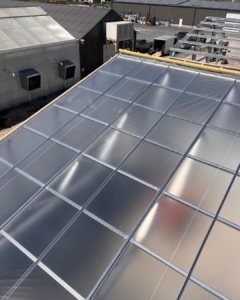
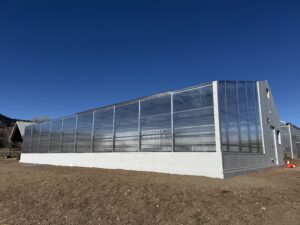
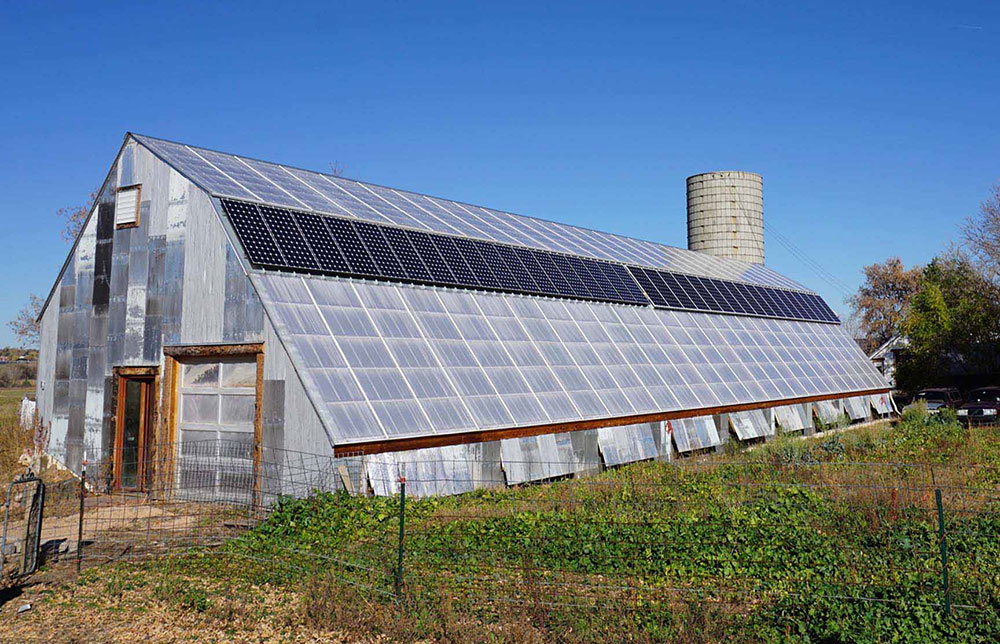
Orientation, insulation, thermal mass, glazing choices, ventilation, and underground heat storage all play a role in stabilizing the growing environment naturally. Instead of relying entirely on mechanical heating and cooling systems, passive solar greenhouses are designed to capture, store, and distribute energy more efficiently.
The goal is simple: create a greenhouse that needs less energy in the first place.
Understanding this approach can help:
- reduce heating and cooling costs
- improve year-round growing conditions
- stabilize greenhouse temperatures
- reduce environmental impact
- improve long-term operational resilience
For many greenhouse projects, the design is the foundation that makes net zero performance possible.
Energy-Efficient Greenhouse Systems and Automation
A greenhouse that wastes energy will always struggle to become net zero. That’s why modern sustainable greenhouse design focuses heavily on optimizing environmental control.
Depending on the project, energy-efficient greenhouse systems may include:
- geothermal heating and cooling
- high-efficiency HVAC(D) systems
- water reclamation
- supplemental LED grow lighting
- controls systems
Advanced greenhouse environmental controls allow growers to monitor and optimize:
- temperature
- humidity
- airflow
- irrigation
- CO2 levels
- lighting
- vapor pressure deficit (VPD)
Integrated greenhouse automation systems help create more stable growing environments while improving operational efficiency and reducing unnecessary energy use. This level of control becomes increasingly important in controlled environment agriculture, where precision directly affects both crop quality and operational performance. Rather than treating sustainability and productivity as separate goals, modern greenhouse systems are increasingly designed to support both at the same time.
As energy prices fluctuate and climate conditions become less predictable, efficient greenhouse design is becoming less of a luxury and more of a necessity.
Learn more about our Environmental Controls
How Climate Battery Systems Reduce Energy Use
One of the most effective ways to improve greenhouse energy efficiency is to capture excess heat when it’s available and store it for later use. At Ceres, we do this with our Ceres’ Ground-to-Air Heat Transfer (GAHT®) technology.
During the day, warm greenhouse air is transferred underground, where the soil acts as thermal mass and stores heat energy naturally. At night, that stored heat can be released back into the greenhouse as temperatures drop. This process helps create a more stable growing environment while reducing reliance on conventional heating systems.
Climate battery greenhouse systems can help:
- reduce heating costs
- stabilize temperature swings
- lower humidity
- reduce condensation
- improve plant health
- improve overall greenhouse energy efficiency
Rather than forcing the greenhouse environment mechanically at all times, thermal storage systems help the structure function more like a living ecosystem.
Learn more about our climate battery solution
Renewable Energy and Electric Greenhouses
Renewable energy still plays an important role in sustainable greenhouse design, but it works best when paired with an already energy-efficient greenhouse. A poorly designed greenhouse with solar panels is still an inefficient greenhouse. A thoughtfully engineered greenhouse that minimizes heating and cooling loads from the start is in a much better position to realistically achieve net zero greenhouse performance.
Many modern electric greenhouses integrate:
- solar and/or wind power
- thermal storage systems
- renewable-powered HVAC(D) systems
- intelligent environmental controls
Because passive solar greenhouse design reduces overall energy demand, renewable energy systems become more practical and cost-effective.

Can a Greenhouse Become Net Positive?
In some cases, yes. A net positive greenhouse produces more energy than it consumes over the course of a year. Whether a greenhouse can realistically become net positive depends on several factors, including:
- geographic location
- available sunlight
- climate conditions
- crop type
- operational intensity
- utility infrastructure
There’s no universal formula. Every greenhouse project is different. As greenhouse technology continues to evolve, projects are becoming increasingly capable of dramatically reducing their environmental footprint while improving long-term resilience.
The Future of Sustainable Greenhouse Design
As energy costs rise and climate conditions become more unpredictable, growers are looking for systems that are not only productive but also resilient. That shift is driving increased interest in:
- energy-efficient greenhouses
- climate-smart agriculture
- renewable energy integration
- local food production
- electrification
- water-conscious growing systems
- long-term operational sustainability
In many ways, the future greenhouse is becoming more than just a growing structure. It’s becoming part of a broader strategy around resilience, resource efficiency, and climate adaptation. And while there’s no single path to creating a net zero greenhouse, thoughtful design can move projects significantly closer to that goal.
At Ceres, sustainability is approached as a systems-level challenge rather than a single technology solution. By combining passive solar greenhouse design, climate-responsive engineering, renewable-ready infrastructure, and integrated environmental controls, greenhouses can be designed to reduce operational costs while supporting productive year-round growing.
While the path to net zero may look different for every project, intelligent greenhouse design can make that future increasingly achievable.
Next Steps
Learn more about our greenhouse design
Take a deeper look at our energy-efficient glazing materials
Explore our integrated technology systems
Interested in exploring the intersection of sustainability, growing, and living spaces? Check out glass house architecture