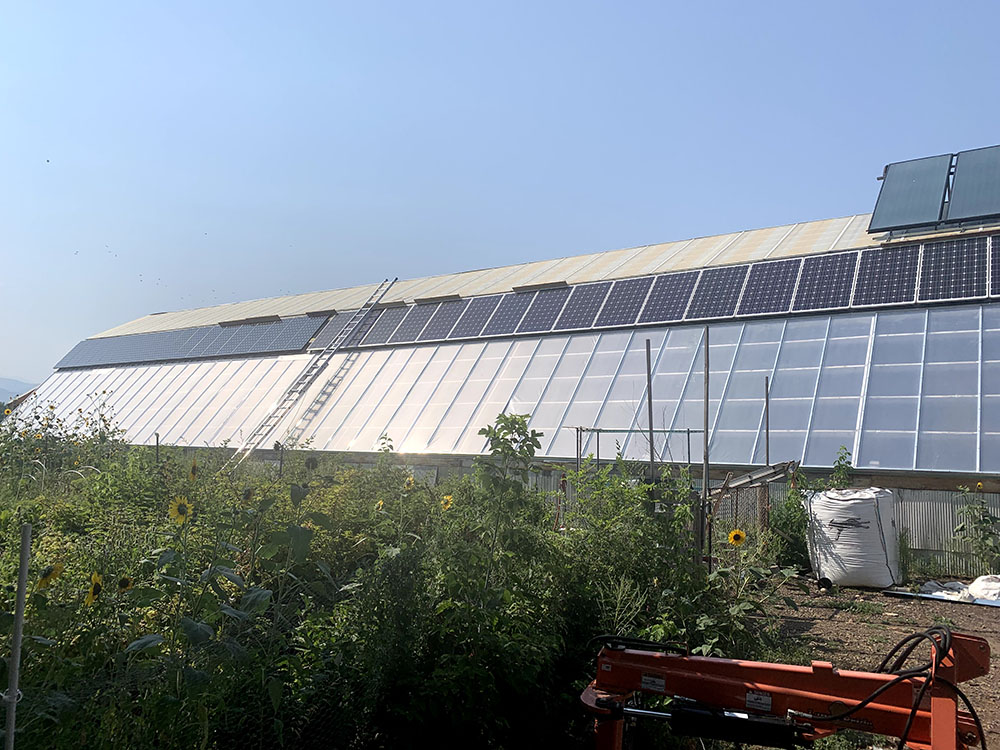
When ETFE comes up in greenhouse design, it’s often described as lighter than glass, highly transparent, and long-lasting.
Those are useful starting points, but they don’t tell the full story. What matters more is how the material performs in a greenhouse environment, and how those properties hold up over time.
Like most materials, ETFE isn’t defined by any single characteristic. Its value comes from how its properties work together under real operating conditions.
A Material Designed for Demanding Environments
ETFE (Ethylene Tetrafluoroethylene) was originally developed for use in environments where conventional materials struggled, particularly where durability, chemical resistance, and long-term stability were required.
That background is part of what makes it relevant in greenhouse applications. Greenhouses may appear simple from the outside, but they create a demanding environment for materials. Continuous UV exposure, humidity, temperature variation, and chemical use all contribute to gradual degradation.
Many glazing materials manage these conditions for a period of time. ETFE tends to manage them for longer.
Light Transmission and Spectrum
One of the most discussed characteristics of ETFE is its high light transmission. Under ideal conditions, ETFE can transmit up to 95% of available light, including a broader portion of the UV spectrum than many traditional greenhouse materials. That difference in spectrum can influence plant development in subtle ways.
Growers may observe:
- Less pest pressure
- Improved coloration in certain crops
- Changes in how plants respond to environmental stress
These effects are not uniform across all crops or growing conditions, but they reflect a broader point:
Light quality matters as much as light quantity.
In addition to transmission, ETFE can also be configured to diffuse light. This reduces sharp shadows and distributes light more evenly across the growing area. In larger greenhouses, this can contribute to more consistent growth across the canopy.
Durability and Lifespan
Durability is often framed in terms of resistance to breakage, but in greenhouse environments, it’s more often about resistance to gradual decline.
ETFE is highly resistant to UV degradation, which allows it to maintain clarity over extended periods. Where some materials may yellow or lose transmission over time, ETFE tends to remain more stable.
It also performs well across a wide temperature range and can tolerate conditions that would cause other materials to become brittle or deform.
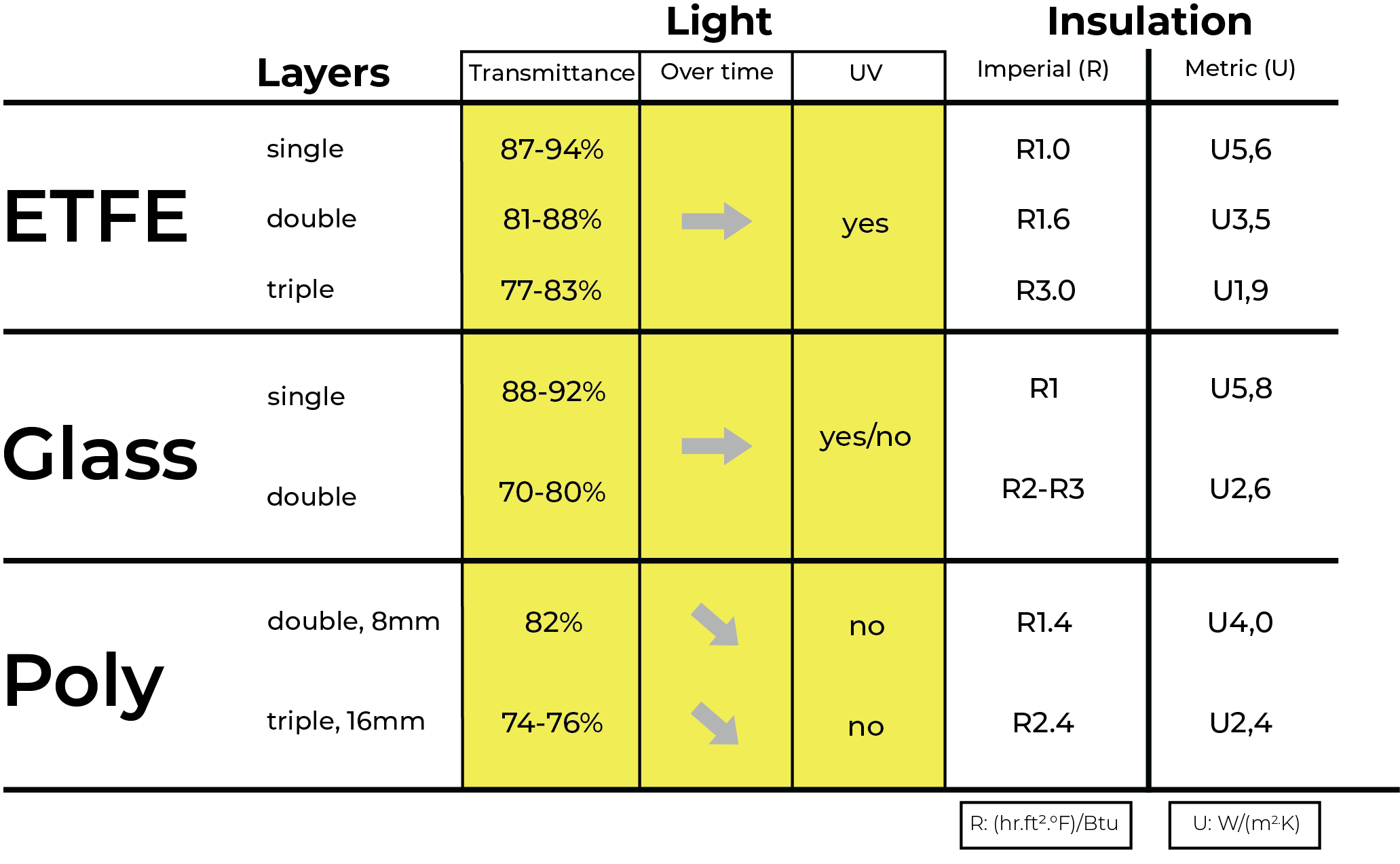
In practical terms, this translates to a long service life (often several decades) without significant loss of performance.
Chemical Resistance
Greenhouses are not chemically neutral environments. Pesticides and/or cleaning agents are part of regular operation, and over time, they can affect the materials used in the structure.
ETFE has a lower risk of surface degradation or loss of clarity due to chemical exposure, which is a factor that isn’t always immediately visible but can influence long-term performance.
Surface Properties and Maintenance
Another defining characteristic of ETFE is its surface behavior. It has a naturally non-stick, low-friction surface, which makes it more difficult for dirt and debris to adhere.
In many environments, rainfall is sufficient to remove accumulated particles, reducing the need for manual cleaning. This doesn’t eliminate maintenance, but it can change the frequency and intensity of cleaning cycles. Over time, that contributes to more stable light transmission and lower maintenance demands.
Strength and Flexibility
ETFE is both strong and flexible, a combination that can be difficult to achieve with more rigid materials. Rather than resisting force in a brittle way, it tends to absorb and redistribute stress.
This allows it to perform well under conditions such as:
- Wind loading
- Snow accumulation
- Impact events (such as hail)
In greenhouse applications, this can reduce the risk of sudden failure and contribute to overall structural resilience.
Specifications of ETFE
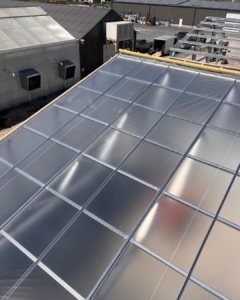
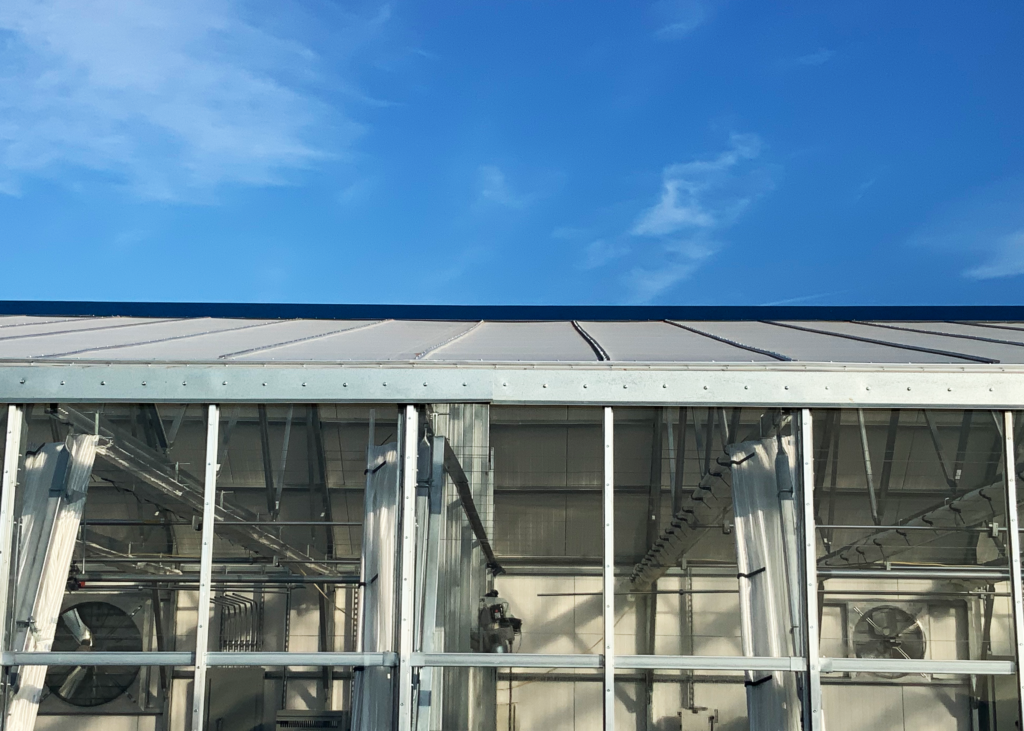
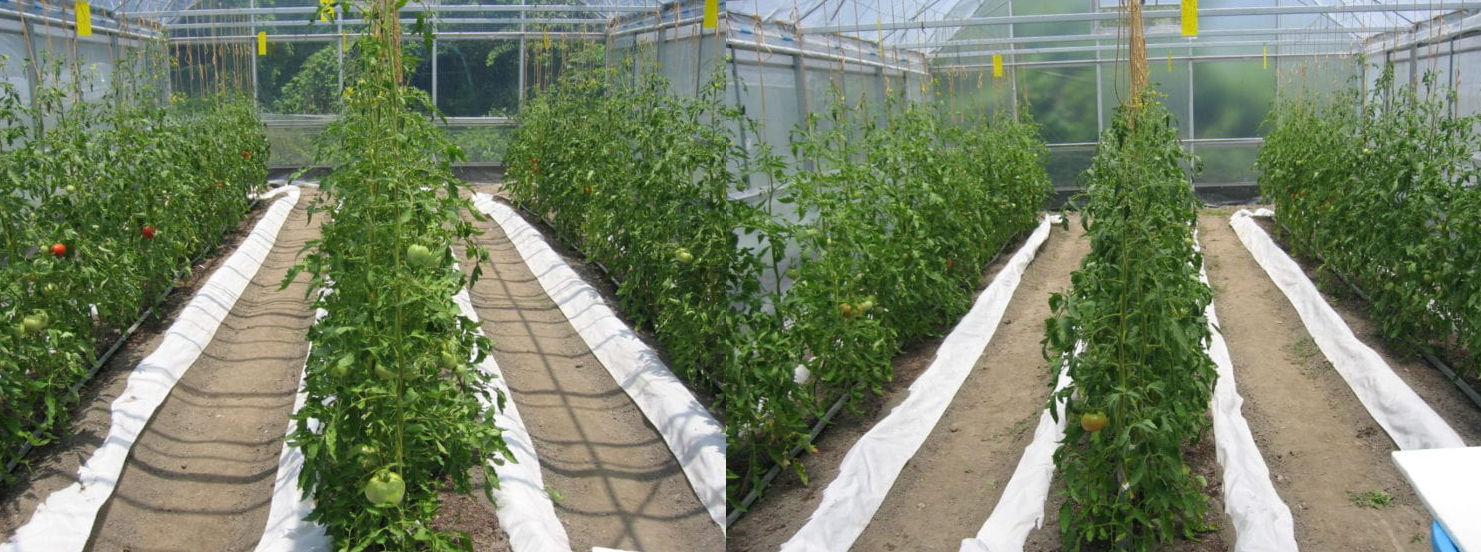
ETFE can be installed in one, two, or three-layer configurations. Adding layers creates a diffuse effect that eliminates shadows and scatters light as it enters the greenhouse, allowing light to penetrate the plant canopy more effectively. A bubble of air sits between the two layers of ETFE, which gives it an R-value of about 1.8 ft2·°F·h/BTU (US) or 0.32 m2·K/W (SI). ETFE film is available in clear or diffuse.
Weight and Structural Implications
Although ETFE is not typically evaluated solely on weight, its low mass has important implications. Because it is significantly lighter than glass, it reduces structural load. This can influence both initial construction and retrofit possibilities.
In some cases, lighter glazing allows for:
- Simplified structural systems
- Reduced material requirements
- Greater flexibility in design
For existing structures, it can also expand the range of feasible upgrades.
How These Properties Work Together
Each of these characteristics: light transmission, durability, chemical resistance, and surface behavior, has value on its own.
Even more importantly, it is how these characteristics interact, creating long-term stability. A material that maintains light transmission over time, requires less frequent cleaning, and resists environmental degradation contributes to a more stable growing environment.
Where ETFE Fits in Greenhouse Design
ETFE is not a default choice, and it’s not necessary for every greenhouse.
But it tends to align well with projects that prioritize:
- Long-term consistency in light transmission
- Reduced maintenance requirements
- Durability in demanding environments
- Integration with broader environmental systems
For a broader look at how ETFE fits into greenhouse design decisions, see:
👉 ETFE Greenhouse Glazing Benefits
A Material in Context
Like any material, ETFE is most useful when evaluated in context. Its strengths become more apparent when the focus shifts from initial installation to long-term performance—how the greenhouse behaves over years of operation, not just at the start.
Material decisions in greenhouse design tend to be made early, but their effects are long-term. Understanding how those materials behave provides a clearer basis for making those decisions.
Continuing the Evaluation
If you’re comparing greenhouse glazing materials more broadly, this overview may be helpful:
👉 Evaluating Glazing Materials
Or, if you’re looking at how ETFE is implemented in greenhouse systems (Product Page):
👉 ETFE Glazing Material
For more specific comparisons, see how ETFE holds up against Polycarbonate and how it performs against Polyfilm
👉Check out our video that looks at light transmission in ETFE and Polycarbonate greenhouses
For more information:
http://www.international-agrophysics.org/
https://uvhero.com/do-plants-need-uv-light/
https://www.uv4plants.org/wp-content/uploads/2014/10/UV-web-opt.pdf
https://www.maximumyield.com/tanning-your-plants-the-curious-effects-of-uva-and-uvb/2/2990
https://www.agcchem.com/blog/8-ways-growers-yield-better-roi-using-etfe-greenhouse-film/
https://www.greenhousegrower.com/technology/customizing-crop-foliage-color-with-leds-red-leaf-lettuce/
http://ursalighting.com/effect-uv-light-plants/https://journals.plos.org/plosone/article?id=10.1371/journal.pone.0188522