× Send

Gutter Connected Greenhouses for Commercial Growing

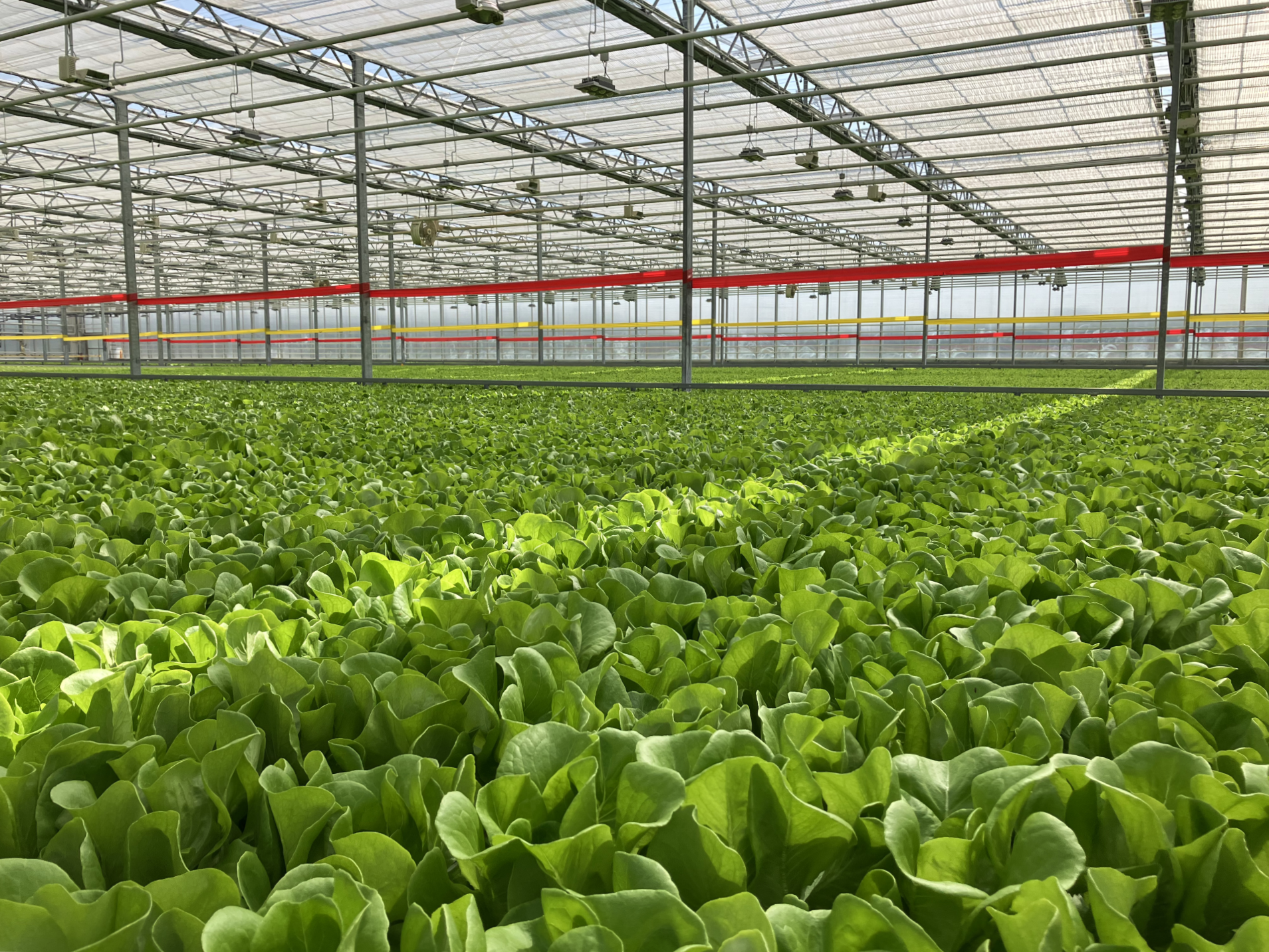
Large-scale gutter connected greenhouses provide commercial growers with efficient, scalable growing environments designed for year-round production. By connecting multiple greenhouse bays into a single integrated structure, growers can maximize production space, improve operational efficiency, and create more stable growing conditions across larger cultivation areas.

Ceres designs high-performance gutter connected greenhouse systems that combine durable commercial structures with advanced climate engineering, passive solar strategies, and energy-efficient environmental controls.

Whether you are expanding an existing operation or developing a new commercial growing facility, our team helps growers create greenhouse systems optimized for productivity, efficiency, and long-term operational performance.

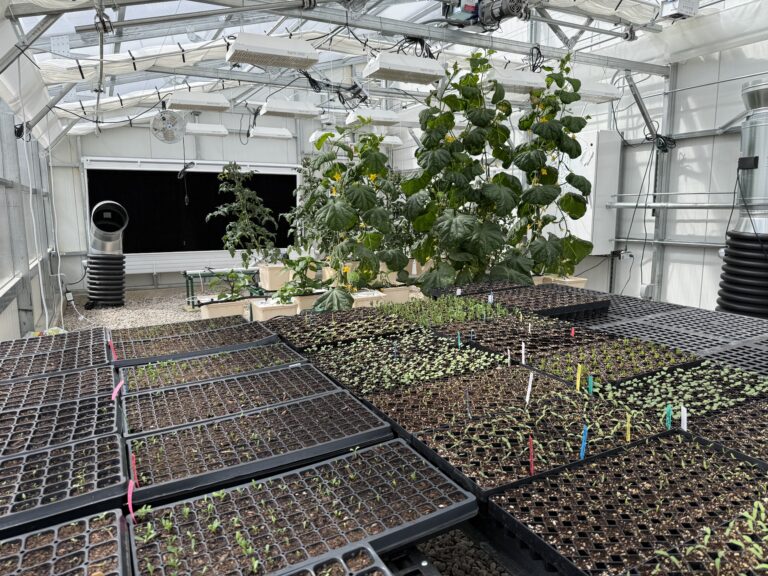
gutter connected greenhouses- cucumber

What Is a Gutter Connected Greenhouse?

A gutter connected greenhouse, or multi-span greenhouse, is a commercial greenhouse structure made up of multiple connected bays joined at the gutter line. Instead of operating as separate standalone structures, gutter connected greenhouses function as one integrated growing environment.

This design allows growers to:

  • Maximize growing space
  • Reduce construction costs per square foot
  • Improve operational efficiency
  • Centralize environmental controls
  • Increase energy efficiency
  • Simplify expansion planning

Because gutter connected greenhouses share structural components and environmental systems, they are commonly used for:

  • Commercial food production
  • Nursery and propagation operations
  • Large-scale controlled environment agriculture (CEA)- typically over one acre
  • University facilities
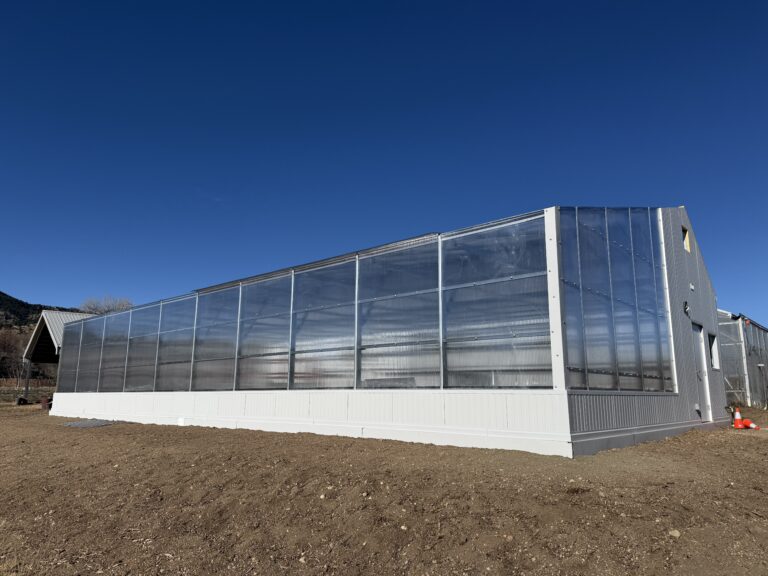
inside the rooftop greenhouse

Benefits of Gutter Connected Greenhouses

Maximized Growing Area

Connected bays reduce wasted space and allow for efficient use of land and infrastructure.

Cost Efficiency at Scale

Lower cost per square foot compared to standalone structures makes these systems ideal for large operations.

Centralized Climate Systems

HVAC, irrigation, and controls can be integrated across the entire facility for improved efficiency.

Improved Workflow Efficiency

Open layouts support streamlined movement of people, plants, and equipment.

Scalable Expansion

Facilities can be expanded over time by adding additional bays without redesigning the entire system.

Energy Optimization Opportunities

When combined with passive solar design strategies and advanced environmental controls, commercial greenhouse operators can significantly reduce long-term operational energy demand.

Greenhouse Climate Performance & Energy Optimization

Large commercial greenhouse systems behave differently than smaller standalone structures. As greenhouse scale increases, airflow behavior, humidity balancing, temperature consistency, and mechanical system efficiency become increasingly important.

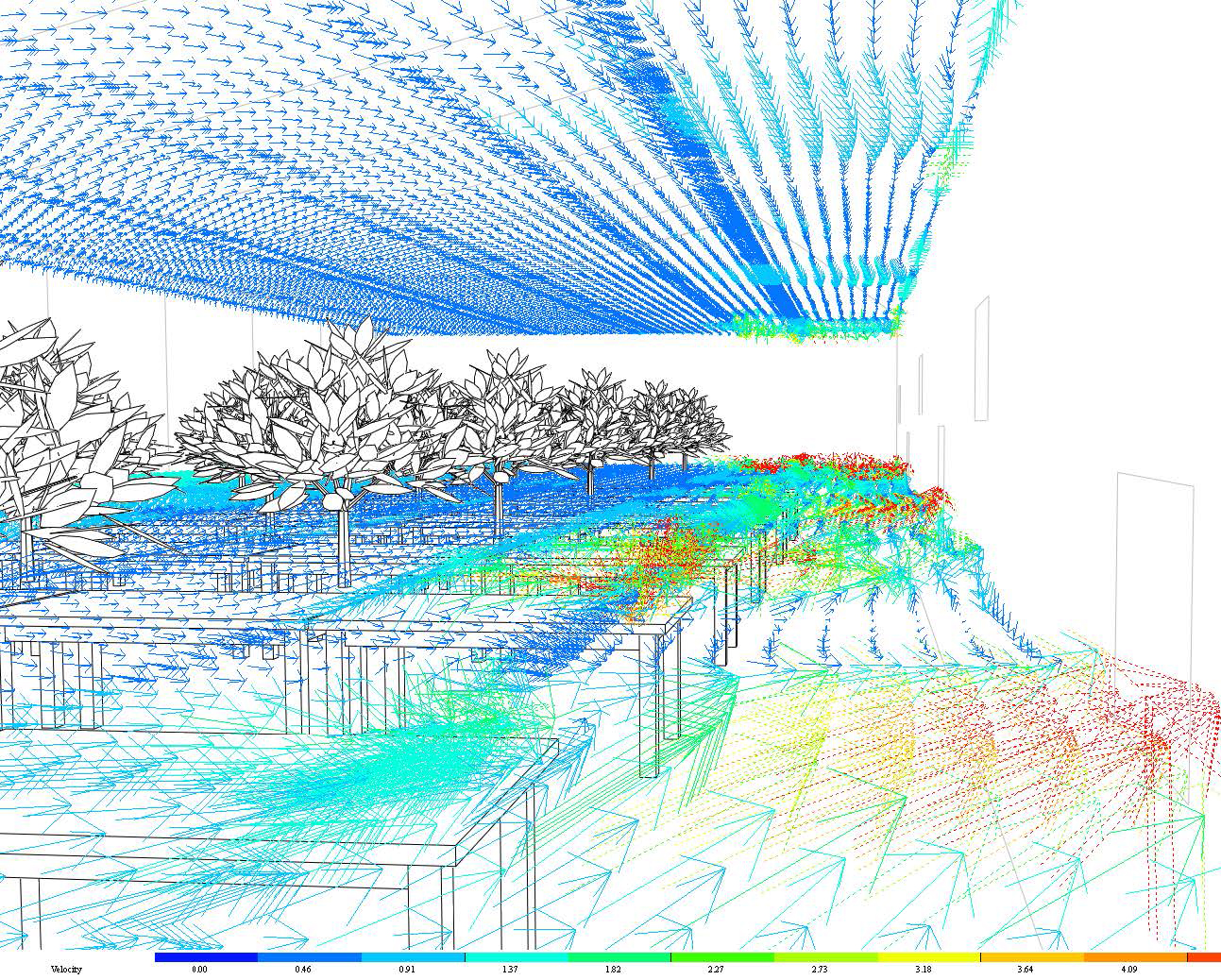
Ceres uses advanced greenhouse performance modeling to evaluate how environmental conditions will behave within a multi-span greenhouse system before construction begins.

CFD airflow simulation inside a commercial greenhouse

CFD airflow simulation — commercial greenhouse system

Our modeling process helps optimize

  • Heat distribution
  • Ventilation effectiveness
  • Humidity management
  • Seasonal energy loads
  • Thermal storage strategies
  • Mechanical system sizing
  • Climate battery integration
  • Passive solar performance

By analyzing greenhouse performance during the design phase, growers can make more informed decisions that improve long-term operational efficiency and growing consistency.

Rather than relying solely on standardized greenhouse designs, Ceres approaches each commercial greenhouse project as a fully integrated environmental system.

→ Want to learn more about our energy and simulation design process? Check out this resource.

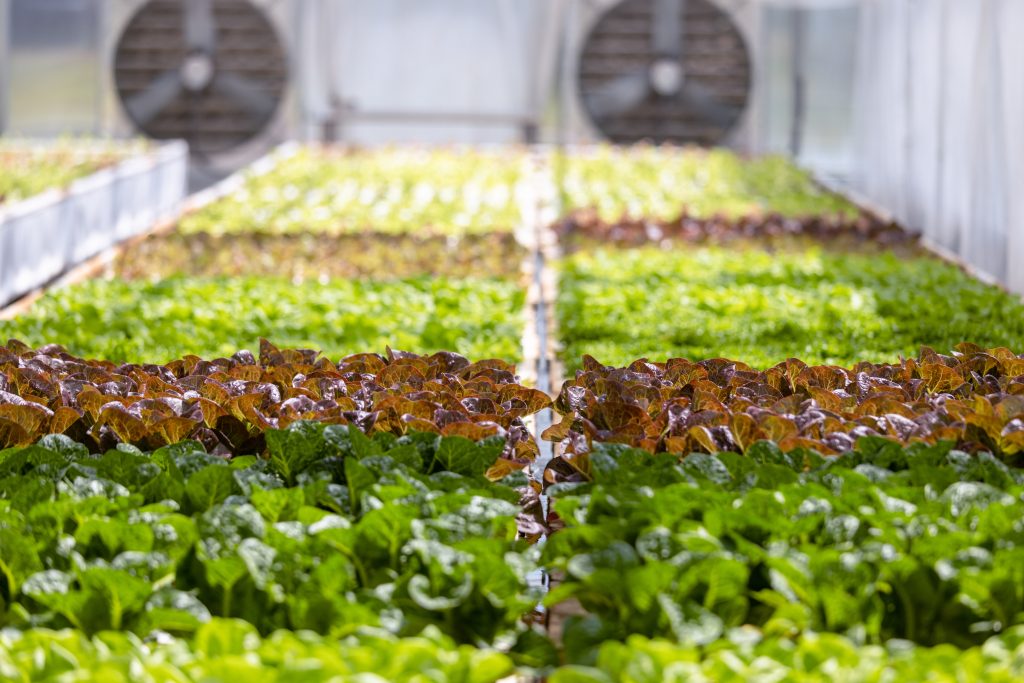
Viemose hydroponic greenhouse system

Is a Gutter Connected Greenhouse Right for Your Project?

Ceres gutter connected greenhouses are designed for commercial growers seeking high-performance growing environments that support long-term operational goals.

This style of greenhouse is best fit for:

  • Operating in warmer climates where high insulation is unnecessary
  • Working within spatial constraints that require efficient land use
  • Projects that are planning for future expansion of the growing area
  • Large-scale commercial projects

Gutter Connected Greenhouse or HighYield™ Kit?

Gutter-connected greenhouses are an ideal solution for large-scale commercial greenhouse growers requiring uninterrupted growing space. While gutter-connected greenhouses offer strong advantages in scalability and cost efficiency, other greenhouse types may be better suited for specific use cases.

Ceres works closely with each client to determine the most suitable structure based on their specific application, site conditions, and long-term goals. We evaluate both upfront material costs and ongoing operational expenses to ensure the selected greenhouse system delivers optimal performance and value over time.

commercial aquaponics greenhouse
Cucumber growing in gutter connected greenhouse

Greenhouse Engineering for Long-Term Performance

Commercial greenhouse success depends on more than structure alone. Environmental control, energy management, airflow design, and operational efficiency all play critical roles in facility performance.

Ceres combines greenhouse design expertise with building science principles to help growers create resilient, energy-conscious growing environments designed for year-round production.

Our team works closely with growers to evaluate:

  • Site conditions
  • Climate challenges
  • Ventilation strategies
  • Heating and cooling requirements
  • Humidity management
  • Energy reduction opportunities

This systems-based approach helps growers create facilities that are both productive and operationally sustainable.

Customized Business Solutions for the Commercial Greenhouse Grower

If a gutter-connected commercial greenhouse is determined to be the optimal design solution, we offer a range of integrated upgrades to enhance system performance and adaptability, including:

These systems can be incorporated into a new standalone structure or added to an existing greenhouse to support phased expansion—ensuring flexibility as your operation grows.

Viemose hydroponic system-

Ceres Greenhouse Options

Access All Greenhouse Related Brochures

Get detailed specs, design options and more inside

greenhouse catalog cover

By clicking the button above, you agree to receive emails from Ceresgs.com. Unsubscribe at any time.

Check Out Our Past Projects

Gutter Connected Greenhouse Kits FAQs

A multi-span greenhouse where individual bays are connected at the gutter to form a single large structure.

Yes, they are one of the most common greenhouse types used in commercial agriculture.

Gutter-connected greenhouses are particularly well suited for large-scale commercial operations because they make efficient use of available land. Additionally, due to the large square footage and overall volume of these facilities, the lower insulation value of the exterior walls has less impact on overall energy efficiency compared to smaller greenhouses

Crop type is less of a determining factor than scale when it comes to gutter-connected greenhouses, as these structures are designed primarily to support large-scale growing operations. With proper environmental controls and layout, virtually any crop can be well suited for this type of greenhouse.

Check out our past projects to see examples of what people grow in all of our greenhouses

Yes, provided the performance and operating requirements of the facility are understood from the outset. In colder winter climates, heating costs can be significant depending on temperature setpoints; however, due to the large overall volume of gutter-connected greenhouses, the lower insulation value of the glazing has a reduced impact on overall energy efficiency.

Gutter-connected greenhouses generally become more energy efficient as their overall size increases. Most are glazed with 8 mm polycarbonate, so a relatively small configuration—such as two 30′ × 100′ greenhouses combined into a 60′ × 100′ structure—would not be particularly energy efficient. However, these facilities do offer roof venting, which provides a passive and energy-efficient method of cooling during the summer months. As the scale increases to an acre (approximately 45,000 square feet) or even a hectare (approximately 100,000 square feet), the impact of the glazing becomes far less significant, and overall energy efficiency improves substantially.

Heating: Most gutter-connected greenhouses are heated using boiler systems that circulate hot water. Heat is typically distributed around the perimeter of the structure and beneath the growing beds to maintain warm root zones. Some smaller facilities instead use gas-fired unit heaters to heat the air directly.

Ventilation: The majority of gutter-connected greenhouses rely on roof venting to release excess heat, with wall vents allowing cooler, fresh outside air to enter. Some facilities also use exhaust fan systems, which may include evaporative cooling. While fan-based systems offer greater control, they come with higher operational costs compared to passive roof venting.

Learn more about Ceres HVAC equipment here

Gutter-connected greenhouses manage airflow and humidity through several methods. Many rely on passive ventilation using the stack effect, in which cooler air enters through lower wall openings and warm, humid air exits through roof vents at the peak of the greenhouse. This approach can also support dehumidification through a technique often referred to as “burping,” where vents are briefly opened and closed based on humidity levels to release moist air and reduce overall humidity.

In facilities that use exhaust fans, airflow typically moves from endwall to endwall. Depending on the capabilities of the greenhouse control system and the fans themselves, dehumidification can be handled in a similar manner by operating the fans for short intervals as needed to lower humidity levels.

Costs vary based on size, location, and systems, but are typically lower per square foot than standalone greenhouses at scale.

Yes, gutter-connected greenhouses can be expanded over time. Expansion is typically easiest when using the same manufacturer as the original structure to ensure compatibility, but it is also possible to connect additional sections from a different manufacturer with proper planning and design.

Another term for a gutter-connected greenhouse, referring to multiple connected growing bays.

Build a Greenhouse That Scales With You

Work with a team that understands how greenhouse systems perform in real-world operations.

Tell Us About Your Project